How Strong Is 7‑Hydroxymitragynine Compared to Kratom?
If you’ve ever gone down the kratom rabbit hole and stumbled on the word “7‑hydroxymitragynine,” you probably had the same reaction most people do: Wait… is this the strong part? And how strong is it really compared to a regular kratom leaf? You’re not alone in wondering that. This single alkaloid is tiny in quantity but massive in impact, and understanding that balance is crucial if you care about kratom safety, potency, or responsible use.
In this article, we’re going to unpack what 7‑hydroxymitragynine (often shortened to 7‑OH) actually is, why it’s considered so potent, how it compares to kratom’s main alkaloid mitragynine, and what that means in plain language for everyday users. We’ll also look at how much 7‑OH is typically in kratom, how labs measure it, and how to think about potency without getting lost in chemistry jargon. By the time you’re done reading, you’ll have a grounded, realistic sense of just how strong 7‑hydroxymitragynine is compared to whole kratom, and why that difference matters.
Along the way, we’ll pull in lab findings, receptor data, and real‑world implications, while keeping it conversational. Think of this less like a lecture and more like a long, detailed chat with someone who’s spent a lot of time in the kratom lab world. According to our lab data and the broader scientific literature, 7‑OH is one of the main reasons kratom’s effects can feel so “punchy” even when the numbers on a certificate of analysis look small.
Let’s start by setting the stage: what exactly is in kratom before we zoom in on this one powerful molecule?
Kratom Alkaloids 101: Mitragynine vs 7‑Hydroxymitragynine
Before you can answer how strong 7‑hydroxymitragynine is compared to kratom, you have to understand that kratom itself is not just one thing. It’s a mix of dozens of alkaloids, with a handful doing most of the heavy lifting. The two stars of the show are mitragynine and 7‑hydroxymitragynine. They’re related, but they don’t behave the same way in the body, and that’s where the potency story begins.
Mitragynine is the main alkaloid in kratom leaf, especially in common commercial products. Studies show that mitragynine often accounts for 1–6% of the dried leaf by weight and for a large majority of the total alkaloid content, up to about two‑thirds of all alkaloids in some Thai varieties. That’s why people sometimes casually say “mitragynine is kratom,” even though that’s oversimplified. It’s abundant, relatively well‑studied, and drives much of kratom’s typical stimulant‑to‑relaxant range depending on dose.
7‑hydroxymitragynine is the opposite in terms of quantity: it’s tiny. In many tested products, it sits in the 0.01–0.04% range of leaf content, sometimes even lower,think hundredths of a percent instead of whole percentages. But that small percentage is misleading. According to in vitro and animal research, 7‑OH interacts with opioid receptors much more strongly than mitragynine, which means very small amounts can produce noticeable effects. That “small but mighty” profile is the root of its reputation.
The other twist is that 7‑OH is not only present naturally in the leaf; it can also form in the body as mitragynine is metabolized. Researchers have shown that in liver preparations, mitragynine can be converted to 7‑OH, which then acts as a more potent mu‑opioid receptor agonist. So when someone consumes kratom, part of what they feel may come not just from the 7‑OH already in the powder, but also from what their own metabolism turns mitragynine into.
This is why you’ll sometimes see people say kratom feels stronger than its lab numbers suggest. On paper, you might see only trace 7‑OH, but in the body, some mitragynine can become 7‑OH and amplify the overall opioid‑like contribution to the experience. That doesn’t mean kratom equals pure 7‑OH by any stretch, but it does explain why understanding 7‑OH potency is so important.
How Much 7‑Hydroxymitragynine Is Actually in Kratom?
Here’s where the conversation gets a little counterintuitive. When we talk about how strong 7‑hydroxymitragynine is “compared to kratom,” most people imagine they’re comparing one spoonful of pure 7‑OH to one spoonful of leaf. In reality, the more accurate comparison is: How strong is 7‑OH per milligram versus the mix of alkaloids in a typical kratom dose, and how much 7‑OH is actually present in that dose to begin with?
Independent lab analyses and academic studies have repeatedly found that mitragynine is present in the low single‑digit percent range in commercial kratom products, while 7‑OH is present at a tiny fraction of that. For example, one study reported mitragynine at about 11.45 mg per gram of product (roughly 1.1%) and 7‑OH at about 0.056 mg per gram, which is around 0.0056%. Other surveys of products in Japan and elsewhere found mitragynine typically in the 12–21 mg/g range and 7‑OH in the 0.11–0.39 mg/g range. These numbers shift by origin, strain, drying methods, and processing, but the basic pattern holds: mitragynine is measured in whole mg per gram, 7‑OH in fractions of a milligram.
If you imagine a 2‑gram serving of a product like the one above, you might be looking at something on the order of ~22–40 mg of mitragynine versus a fraction of a milligram of 7‑OH in the raw powder. That’s the “front‑end” picture, before metabolism. So why does 7‑OH get such an outsized reputation? Because of what it does at the receptor level once it’s in play, and because even small amounts can matter when the receptor affinity and intrinsic efficacy are much higher.
It’s also worth noting that not all products are equal. Some extracts or “enhanced” products may contain elevated levels of 7‑OH, whether by design or poor quality control, and that’s where potency can jump far beyond what traditional leaf users might expect. According to our lab data, we’ve occasionally seen products where 7‑OH levels are noticeably higher than in typical leaf, and those tend to correlate with much more sedating and euphoric profiles. That’s one reason reputable vendors lean hard on full COAs and batch testing to avoid surprises.
One practical takeaway: seeing 7‑OH in the 0.01–0.04% band on a COA doesn’t mean it’s irrelevant. Because of the way this alkaloid behaves pharmacologically, those tiny numbers can still contribute meaningfully, especially once metabolic conversion is factored in. So you can’t just dismiss it because the percentage looks small.
Receptor Potency: Why 7‑OH Hits Harder
When people say “7‑hydroxymitragynine is way stronger than mitragynine,” they’re usually talking about its behavior at the mu‑opioid receptor (MOR), the same receptor targeted by classical opioids like morphine. Kratom’s alkaloids are not identical to traditional opioids, but they do interact with those receptors, and that’s where potency comparisons come from.
Several lab and animal studies have compared mitragynine and 7‑OH head-to-head. In receptor binding and functional assays, 7‑OH consistently comes out as much more potent. One line of research found that 7‑OH had roughly 9‑fold higher affinity at the human mu‑opioid receptor than mitragynine, and acted as a partial agonist with higher efficacy. Another study estimated that 7‑OH was about 10‑fold more potent than mitragynine in activating the mu‑opioid receptor in certain in vitro models. Others have reported that 7‑OH can have several‑fold higher intrinsic activity and binding affinity compared to mitragynine.
On top of comparing 7‑OH to mitragynine, some researchers have compared it to morphine. In one classic experiment on isolated tissue (guinea pig ileum), 7‑OH showed 13‑fold greater potency than morphine and 46‑fold greater than mitragynine. Some analyses and reviews pull these data together and suggest 7‑OH may be on the order of 10–13 times more potent than morphine and up to around 40 times more potent than mitragynine at the opioid receptor level, depending on the assay. These numbers vary by study and method, but the trend is clear: per unit, 7‑OH is significantly more potent than mitragynine at mu‑opioid receptors.
That doesn’t mean 7‑OH turns kratom into an “opioid” in the way people think of pharmaceutical opioids, because kratom is a blend of alkaloids with partial agonism, G‑protein‑biased signaling, and other receptor targets in the mix. But in terms of the specific interaction at MOR, 7‑OH is the heavy hitter. Mitragynine, by contrast, has lower affinity for MOR, more complex behavioral effects (sometimes acting as an antagonist in certain test systems), and a broader pharmacological footprint.
The key takeaway is this: when researchers and labs talk about the “potency” of 7‑OH, they’re usually referring to its ability to bind and activate mu‑opioid receptors much more efficiently than mitragynine. That’s the scientific backbone behind the idea that a little bit of 7‑OH can go a long way.
So, How Strong Is 7‑OH Compared to Kratom as a Whole?
Now we can tackle the main question more directly: How strong is 7‑hydroxymitragynine compared to kratom? To answer that honestly, you have to separate two concepts: per‑milligram potency and real‑world experience with whole leaf.
From a per‑milligram standpoint, multiple lines of evidence suggest that 7‑OH is significantly stronger than mitragynine at the mu‑opioid receptor, on the order of roughly 10‑fold in receptor assays and potentially up to several dozen‑fold in certain functional or tissue models. When people summarize this, they’ll often say 7‑OH is “much stronger” or “far more potent” than mitragynine. Some commercial and scientific summaries have framed it as “up to 40 times stronger than mitragynine” and “around 10–13 times more potent than morphine,” though those are approximate and model‑dependent. So if you compare pure 7‑OH to pure mitragynine on a receptor basis, 7‑OH wins by a wide margin.
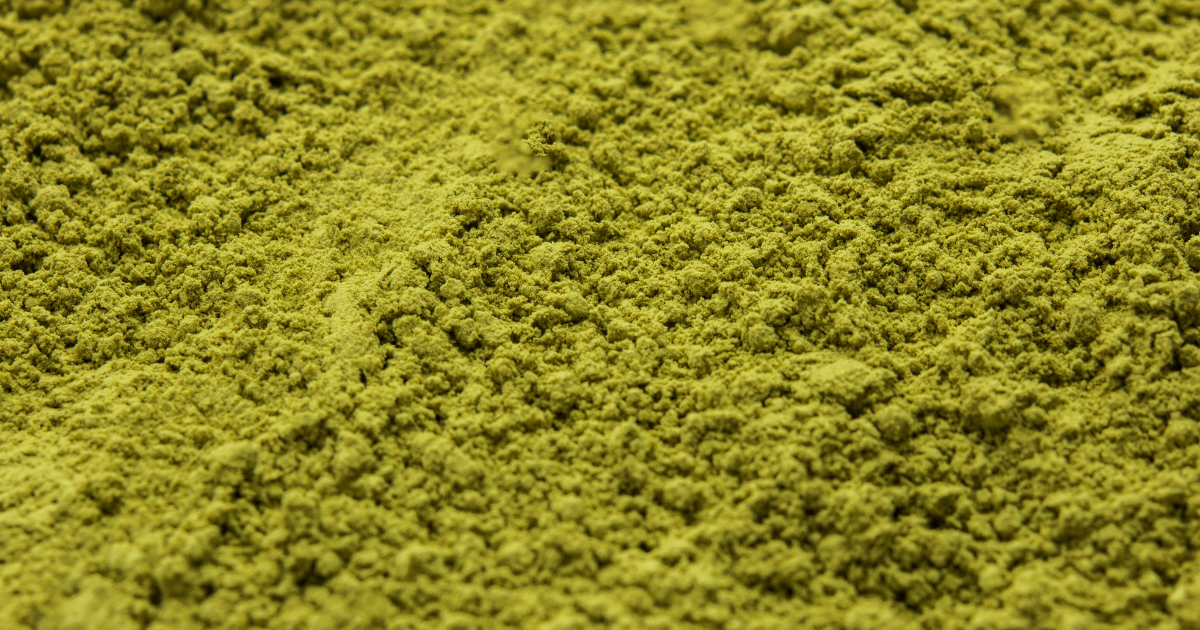
However, the whole kratom leaf is not pure 7‑OH, and not pure mitragynine either. It’s a complex mixture where mitragynine dominates the alkaloid content, and 7‑OH exists in very small amounts. In a typical serving of plain powder, most of the milligram weight is plant material, with alkaloids making up a small fraction; within that fraction, mitragynine is the main player. So when someone consumes a normal dose of kratom, what they feel is a composite effect: mitragynine’s stimulant‑to‑relaxant spectrum, minor alkaloids doing their own subtle work, and 7‑OH adding a disproportionately strong analgesic and sedative/euphoric component relative to its tiny dose.
This is why it can be misleading to say, “kratom is 40 times weaker than 7‑OH” or something equally simplistic. The more accurate statement is: per unit at the mu‑opioid receptor, 7‑OH is far more potent than mitragynine, but in a typical kratom leaf, 7‑OH is present in much smaller quantities than mitragynine, so the overall experience is a blend where mitragynine still plays the largest quantitative role while 7‑OH “supercharges” the opioid‑like effects from the background.
Another nuance is that kratom’s subjective profile at lower servings often feels more like a mild stimulant or mood lifter, which aligns more with mitragynine’s profile and less with the strongly sedating, opioid‑like feel associated with high‑potency MOR agonists. As serving sizes increase, people often report more analgesia and sedation, which is where the contribution of 7‑OH (both native and metabolically formed) becomes more noticeable. So in everyday language, you could say: in kratom, mitragynine shapes the “overall vibe,” while 7‑OH intensifies the heavy, pain‑relieving side of that spectrum.
If you were to isolate 7‑OH and consume it at doses comparable to the total alkaloid intake from leaf, you’d likely be dealing with a much more intense, opioid‑like compound than traditional kratom ever delivers on its own. That’s part of why regulators and scientists pay such close attention to 7‑OH levels and why products that spike 7‑OH beyond natural ranges raise red flags.
Metabolism: Why 7‑OH Matters Even When It’s a Trace Alkaloid
One of the most interesting (and slightly tricky) aspects of this comparison is metabolism. Kratom doesn’t just deliver 7‑OH directly; it also provides mitragynine, which can be turned into 7‑OH inside the body. This means the amount of 7‑OH your receptors “see” isn't just the number on the COA; it’s the natural 7‑OH plus whatever your liver generates as it processes mitragynine.
A key study using mouse and human liver preparations showed that mitragynine is converted into 7‑OH, which then acts as a much more potent mu‑opioid receptor agonist. In animal models, 7‑OH administered directly produced robust analgesic effects at lower doses than mitragynine, which supported the idea that even modest conversion can explain a large part of mitragynine’s pain‑relieving action. Some researchers have gone as far as arguing that 7‑OH may be responsible for much of the opioid‑like analgesia people associate with kratom, even though it’s technically a downstream metabolite.
Metabolism varies from person to person based on genetics, liver enzyme activity, other medications, and overall health. So two people can take the same kratom product and end up with different internal levels of 7‑OH produced from the same mitragynine intake. That may help explain why some users report much stronger sedating or pain‑relieving effects than others at similar servings. In our own lab‑informed observations, we’ve seen that products with similar mitragynine numbers can still be perceived differently depending on how an individual’s body handles the conversion process.
This metabolic angle also complicates safety discussions. Because 7‑OH is more potent at MOR and has been linked in the literature to a higher abuse potential than mitragynine, the amount formed internally could influence risk profiles. That doesn’t mean kratom equals high‑risk opioid use, but it does mean responsible users should respect the possibility that their body is quietly concentrating some of mitragynine’s action into a stronger metabolite.
In other words, even when 7‑OH looks like a bit player on a lab report, it may be playing a major role in the background, both as a native alkaloid and as a metabolite of mitragynine.
Safety, Misuse Potential, and Why Potency Isn’t Just a Number
Once you realize that 7‑OH is significantly more potent at mu‑opioid receptors than mitragynine, the next question is unavoidable: Does that make kratom unsafe? The answer is more nuanced than a simple yes or no. Potency is part of the picture, but so are dose, pattern of use, product type, and individual physiology.
Regulatory and scientific reviews note that mitragynine and 7‑OH both interact with opioid receptors and can produce analgesic and opioid‑like effects in animals, but they also highlight that the overall risk profile of kratom appears to differ from classical opioids for a variety of reasons, including partial agonism and signaling bias. At the same time, some reports suggest that 7‑OH specifically has a higher abuse potential than mitragynine because of its potency and its more opioid‑like subjective effects. That’s why products or extracts with elevated 7‑OH content can be more concerning than traditional leaf.
From a practical perspective, the presence of 7‑OH means:
Even small shifts in 7‑OH concentration can noticeably change how “heavy” or sedating a product feels.
Extracts that concentrate 7‑OH beyond natural leaf levels can behave very differently from plain kratom, both in intensity and risk profile.
Individuals with higher metabolic conversion of mitragynine to 7‑OH may be more sensitive to the opioid‑like aspects of kratom’s effects.
According to our lab data and experience, vendors that focus on safety tend to prioritize products where 7‑OH remains in a natural, low range typical of leaf, and they avoid extracts that deliberately spike 7‑OH content. When you see highly “fortified” products boasting about extreme potency, the underlying mechanism often comes back to 7‑OH or other concentrated derivatives, which is where caution becomes more important.
So, while 7‑OH’s potency doesn’t automatically make kratom dangerous, it does mean that users who are trying to keep their risk profile lower should pay attention to 7‑OH levels in COAs, be wary of ultra‑strong extracts, and respect the fact that this alkaloid is not something to push to the limit. Potency can be a tool when used carefully,but it can also be a trap when ignored.
How Labs Test 7‑Hydroxymitragynine (And Why It Matters)
If you’re serious about understanding how strong a kratom product might be, you can’t just trust marketing names like “Extra Strength” or “Super Bali.” You need lab data. Modern kratom testing labs typically use methods such as high‑performance liquid chromatography (HPLC) or liquid chromatography coupled with mass spectrometry (LC‑MS) to quantify mitragynine and 7‑OH with high precision.
In a typical kratom certificate of analysis (COA), you’ll see mitragynine listed in mg/g or as a percentage, alongside 7‑OH in the same units. High‑quality labs will also report limits of detection and quantification, so you know whether a “non‑detect” actually means “zero” or just “below our threshold.” Because 7‑OH naturally occurs at very low levels in leaves, it pushes the limits of detection a bit more than mitragynine, which is why sensitive equipment and proper calibration matter.
From an interpretation standpoint, you want to look for:
Mitragynine is in a plausible range for leaf products (often roughly 1–6% of weight, depending on origin and processing).
7‑OH in a trace range typical of natural leaf (often in the 0.01–0.04% band, sometimes a bit above or below).
Extracts that show 7‑OH levels much higher than those leaf norms should be treated as fundamentally different products, not just “stronger” versions of the same thing.
According to our lab data, when 7‑OH stays within natural leaf‑like bounds, the product’s overall profile tends to align with what experienced kratom users expect: a gradual, dose‑dependent shift from stimulation and mood support to relaxation and analgesia. When 7‑OH climbs beyond that, the effects become more sharply sedating and opioid‑like, and the room for error shrinks.
This is why vendor transparency is so crucial. Without real lab results, you’re essentially guessing how much 7‑OH you’re dealing with. Given how potent this alkaloid is per milligram, that’s not a great place to be.
Common Myths About 7‑Hydroxymitragynine and Kratom Strength
Whenever a topic gets this technical, myths and half‑truths start to float around. Let’s clear up a few that show up frequently in kratom circles.
Myth 1: “Kratom is basically pure 7‑OH.”
This is flatly incorrect. Most kratom products contain much more mitragynine than 7‑OH, often by two orders of magnitude or more. 7‑OH is a minor constituent by weight, even though its potency at MOR is much higher. The idea that leaf powder is “mostly 7‑OH” doesn’t match the data.
Myth 2: “7‑OH levels don’t matter because they’re so tiny.”
This is the opposite of oversimplification. While the absolute numbers are small, multiple studies show that 7‑OH has significantly higher binding affinity and efficacy at mu‑opioid receptors than mitragynine, and contributes strongly to analgesic effects. Combined with metabolic conversion from mitragynine, those low numbers on a COA can still translate into meaningful pharmacology.
Myth 3: “Any kratom product is as risky as isolated 7‑OH.”
Risk is dose and context dependent. A whole kratom leaf contains a blend of alkaloids and typically only traces of 7‑OH, which behaves differently in practice than pure, concentrated 7‑OH or heavily fortified extracts. That doesn’t mean kratom is risk‑free, but it does mean you can’t treat a natural leaf product and a highly enriched 7‑OH extract as if they are the same.
Myth 4: “More 7‑OH is always better.”
For people focused on safety and long‑term, sustainable use, the goal is rarely “maximum possible opioid‑like intensity.” Because 7‑OH has been associated with higher abuse potential in some analyses and because of its potency at MOR, pushing its levels far above natural ranges can tilt the balance away from the more flexible stimulant/relaxant profile that kratom is known for and closer to a narrow, heavy sedative profile.
Recognizing these myths for what they are helps you interpret potency claims more realistically and keeps the conversation grounded in actual lab findings instead of hype.
Practical Takeaways: How to Use This Information as a Kratom Consumer
Knowing that 7‑OH is much more potent than mitragynine is interesting, but it only becomes useful when you translate it into practical choices. If you’re someone who cares about how strong your kratom is and how safe your routine is, here’s how to apply what we’ve covered.
First, treat COAs like your best friend. When you see a kratom lab report, don’t just skim for “pass/fail” on contamination; actually look at the mitragynine and 7‑OH numbers. A product with 1–2% mitragynine and trace 7‑OH is going to behave differently from an extract with several percent 7‑OH. If 7‑OH numbers look unusually high for something marketed as “plain leaf,” that’s a sign to ask questions.
Second, be cautious with extracts whose marketing leans heavily on “extreme strength,” especially if they don’t show clear 7‑OH data. Because 7‑OH is so potent at the mu‑opioid receptor, concentrated products can lead to much steeper dose‑response curves, meaning a small increase in serving size can feel disproportionately stronger. According to our lab‑side experience, people tend to underestimate this jump the first time they move from leaf to stronger extracts.
Third, pay attention to how your own body responds. Since mitragynine can be metabolized into 7‑OH and metabolism varies person to person, your experience with kratom might be more stimulating or more sedating than someone else’s on the same product. If you find yourself gravitating toward increasingly heavy, sedating effects, that’s a cue to take stock of your habits, serving size, and frequency.
Finally, respect the compound. The fact that 7‑OH is “only” a small fraction of the leaf doesn’t mean the risk is imaginary. It means kratom’s profile is a balancing act between a relatively abundant, milder alkaloid (mitragynine) and a much more potent, less abundant one (7‑OH), plus a supporting cast of minor alkaloids. Understanding that balance, and not pushing the 7‑OH side too hard, is one of the keys to more responsible kratom use.
Conclusion: Putting 7‑Hydroxymitragynine’s Strength in Perspective
When you zoom out and look at the full picture, the answer to “How strong is 7‑hydroxymitragynine compared to kratom?” is nuanced but clear. On a per‑milligram basis at the mu‑opioid receptor, 7‑OH is substantially more potent than mitragynine, often by roughly an order of magnitude or more in lab models, and can even surpass morphine in certain assays. That’s why it gets so much attention from scientists, regulators, and serious kratom users alike.
At the same time, the whole kratom leaf is not a pure 7‑OH product. It’s a complex plant material where mitragynine dominates the alkaloid profile, 7‑OH appears in small amounts, and metabolism converts some mitragynine into 7‑OH inside the body. The result is a blended effect: mitragynine shapes much of the overall character, while 7‑OH significantly amplifies the opioid‑like analgesic and sedating side of that spectrum despite its low concentration.
For practical purposes, that means you should think of 7‑OH as the “concentrated punch” behind some of kratom’s heavier effects, not the whole story, but not a trivial detail either. Paying attention to 7‑OH levels on COAs, being cautious with extracts, and respecting individual metabolic differences are all smart moves if you want to balance potency with safety.
Kratom Test Research
VerifiedIndependent lab analysis and transparency reporting. We verify vendor claims through third-party COA data — no vendor influence, no sponsored results.
Get lab insights before everyone else
Join kratom enthusiasts who rely on independent lab data. New COA breakdowns, safety alerts, and vendor updates — delivered weekly.
No spam · Unsubscribe anytime · Free forever
Affiliate Disclosure
Some product links are affiliate links. We may earn a commission at no cost to you. Affiliate relationships never influence our transparency scores, risk flags, or analytical methodology.