Cheapest 7‑OH Per Mg: The Real Price‑Per‑Milligram Playbook
If you’ve spent any time hunting for 7‑hydroxymitragynine (7‑OH) products, you’ve probably had that moment where you stare at three different bottles and think, “Okay, but which one is actually the best deal?” It’s not obvious at all, and honestly, that’s not an accident. Labels emphasize “extra strength,” “advanced alkaloids,” or “30 count,” but almost nobody tells you the one number that really matters: what you’re paying per milligram of 7‑OH. That’s the puzzle we’re going to solve here, step by step, in plain English. By the end, you’ll know how to decode labels, run the simple math in your head (or on your phone), and tell instantly whether a product is genuinely cheap per mg or just dressed up to look like it is.
In our own price checks across multiple 7‑OH tablet and extract brands, we kept running into the same issue: the cheapest‑looking bottle on the shelf was often one of the most expensive once you broke it down by milligram. A small blister pack at the counter might be 15 dollars and feel “reasonable,” while a 150‑dollar bulk bottle looked outrageous, yet the bulk bottle delivered far more 7‑OH for each dollar spent. That’s the disconnect most people never see. This guide exists to give you a repeatable framework you can apply to any 7‑OH product, whether you’re shopping in a smoke shop, browsing online, or just comparing what you already have in your cabinet.
We’ll walk through what 7‑OH actually is, how it’s different from regular kratom, why per‑mg pricing is the only metric that really matters, and how to calculate cost per mg in a way that takes less than a minute. We’ll also talk about common mistakes people make when they chase the “cheapest” option without considering potency, quality, or safety. Along the way, you’ll get practical tips on choosing strengths, bottle sizes, and vendors so you’re not just saving money on paper but actually buying something you can trust.
Why 7‑OH Is Treated Differently From Regular Kratom
Before you can get serious about price comparison, you need to understand what 7‑hydroxymitragynine actually is and why it has its own little pricing universe. In regular kratom leaf, 7‑OH is a minor alkaloid. The star of the show in plain powder is mitragynine, which is present at much higher concentrations. Your body converts some mitragynine into 7‑OH after you ingest it, which is part of why kratom has the profile it does. But if you look at raw leaf on a lab report, the amount of naturally occurring 7‑OH is tiny. We’re talking fractions of a milligram per gram of dried leaf, while mitragynine might be more than a hundred times higher.
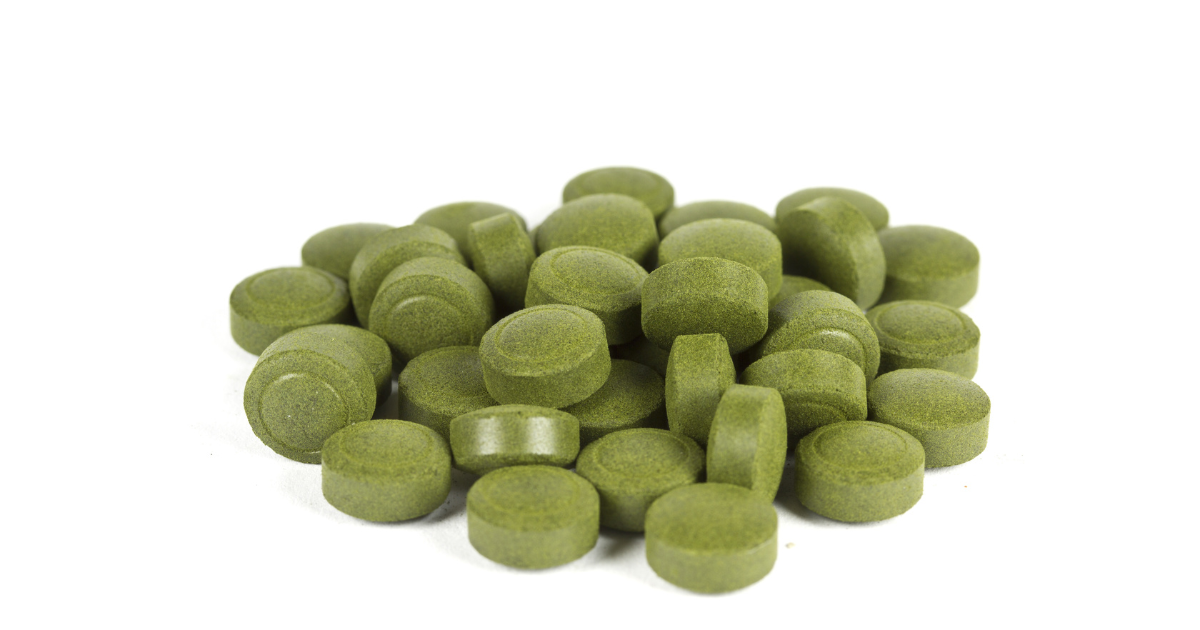
Extracts and 7‑OH‑standardized tablets flip that script. Instead of relying on your body to transform mitragynine, manufacturers concentrate 7‑OH directly. Now, instead of 0.2 or 0.3 mg per gram, you might see 10, 20, or even dozens of milligrams of 7‑OH per gram of product. When you’re dealing with tablets labeled 10 mg, 14 mg, 20 mg, 30 mg, or 40 mg of 7‑OH each, you’re far, far away from anything you’d ever see in a spoonful of basic powder. That level of concentration is why pricing feels so different and why cost per mg matters so much more than just “how big is the bottle.”
Because 7‑OH is much more potent at opioid receptors than mitragynine, even small shifts in milligram amounts can have a noticeable impact. That’s part of the appeal of standardized 7‑OH tablets, but it’s also why you want to know exactly how much you’re paying per milligram and how many milligrams you’re actually taking. If you only compare “30 count vs 50 count” without accounting for the strength of each tablet, you’re basically guessing. And guessing with something this concentrated is not great practice on either the budget or safety front.
The One Formula That Actually Matters: Cost Per Mg
Let’s strip away all the marketing and get down to the only formula that really matters when you’re comparing 7‑OH products:
Cost per mg of 7‑OH = Total price ÷ Total milligrams of 7‑OH in the package.
That’s it. Three pieces of information and you’re done. You need:
The milligrams of 7‑OH per tablet or serving.
The number of tablets or servings in the package.
The price of that package.
Once you have those, you multiply mg per tablet by the number of tablets to get the total mg in the bottle or blister pack. Then you divide the price by that total mg. If you like working with round numbers, you can take that cost-per-mg number and multiply it by 100 to get “price per 100 mg,” which feels more concrete to many people.
Here’s a simple example. Imagine a bottle of 20 mg 7‑OH tablets containing 50 tablets. That’s 20 mg × 50 = 1,000 mg total 7‑OH. If the bottle costs $ 150, your cost per mg is $ 150 ÷ 1,000 = $ 0.15 per mg. Now compare that to a small 3‑count blister pack of 20 mg tablets at 15 dollars. That pack holds 60 mg total (20 mg × 3). Your cost per mg is 15 ÷ 60 = 0.25 dollars per mg. The little blister feels “cheap,” but on a per‑mg basis, it’s actually significantly more expensive.
Once you run this math a few times, it becomes almost automatic. You’ll stop asking, “How much is this bottle?” and start asking, “How much am I paying per milligram?” That’s the mindset shift that separates casual shoppers from people who actually optimize their kratom budget.
Reading 7‑OH Labels Like A Pro
Label reading is half the battle. If you don’t pull the right numbers from the packaging, your cost‑per‑mg calculations fall apart. The problem is that some products make it painfully easy, while others hide the ball behind vague wording or confusing serving descriptions.
You want to see a clear, unambiguous statement like “7‑hydroxymitragynine: 20 mg per tablet” or “Each tablet contains 14 mg 7‑OH.” If a label only says something like “kratom extract blend,” “advanced alkaloid formula,” or just lists total extract weight without specifying how much of that is 7‑OH, you’re already on shaky ground. You can’t calculate the price per mg of 7‑OH if you don’t know the milligrams in the first place.
Servings can be another trick. Some bottles list “200 servings” and then claim each serving is a fraction of a tablet. Technically, they’re not lying, but it’s designed to make the number of servings look impressive. For cost‑per‑mg analysis, always anchor on milligrams per tablet or per capsule, not “servings.” Then count the actual units in the bottle: 30 tablets, 50 tablets, 100 tablets, etc. Ignore the serving spin, do your own math.
With practice, you’ll spot honest labels instantly. They’ll have:
Clear mg of 7‑OH per unit.
A straightforward count of tablets or capsules.
No weird, overcomplicated serving language.
Those are the products you can actually compare in a meaningful way.
Tablet Strength, Bottle Size, And Where The Deals Hide
Once you’ve nailed the label basics, the next layer is understanding how tablet strength and bottle size interact. This is where you start to see patterns that the average shopper completely misses.
High‑strength tablets, think 30 mg or 40 mg 7‑OH per piece, look expensive at first glance. The sticker price on a 30‑ or 40‑count bottle can be intimidating. But when you multiply the mg per tablet by the count and then divide the total price, those stronger, larger bottles often end up with very competitive cost‑per‑mg numbers. In some cases, they beat the pants off of lower‑strength or tiny‑count products.
Lower‑strength tablets, like 10 mg or 14 mg, can go either way. If they’re sold in big bottles with 50 or 100 tablets, they might deliver solid value while giving you finer control over your serving size. But if they’re sold only in little blister packs or “sample” bottles, the per‑mg cost can be surprisingly high. That’s the trade‑off: lower up‑front cost, higher cost per milligram.
In general, you can think of 7‑OH products in three rough tiers:
Tiny “trial” or convenience packs (2–3 count).
Mid‑size packs (10–20 count).
Bulk bottles (30–100+ count).
Trial packs almost always have the worst cost per mg, but they’re easy on the wallet in the moment, which is why they dominate convenience shelves. Mid‑size packs sit in the middle: not terrible, not amazing. Bulk bottles are where most of the true value hides, as long as you’re comfortable dropping more cash up front and you trust the brand.
Cheap On Paper vs Cheap In Real Life
It’s tempting to just sort everything by cost per mg and circle the lowest number. That seems logical, but with 7‑OH, it’s not quite that simple. There’s a difference between “cheap on paper” and “actually worth buying.”
Remember, 7‑OH is strong. You’re dealing with a concentrated alkaloid that doesn’t occur in these kinds of amounts in regular leaf. If you chase the absolute rock‑bottom cost per mg and ignore quality, purity, and testing, you’re taking on risk that doesn’t show up in your spreadsheet. Maybe the product’s label isn’t accurate. Maybe the material contains unwanted residues or contaminants from sloppy processing. Maybe the 7‑OH level is all over the place from batch to batch.
This is why price comparison for 7‑OH has to be a two‑step process. Step one: filter out any product that doesn’t meet a basic standard of transparency (clear labeling) and safety (recent lab testing). Step two: among the products that survive that filter, compare the cost per mg. If you blend those steps into one, you’re less likely to end up with “cheap” 7‑OH that also feels like a gamble every time you open the bottle.
The Role Of Lab Testing And COAs In A Price‑Focused World
You might be thinking, “I’m reading a price comparison guide, why are we talking about lab testing?” Because with something as concentrated as 7‑OH, lab data is part of the value, even if it doesn’t show up directly on the price tag. A good certificate of analysis (COA) does a few crucial things for you.
First, it confirms that the alkaloid levels on the label are at least in the right ballpark. If a product claims 20 mg of 7‑OH per tablet but the lab report shows something wildly different, you’re not getting what you think you’re paying for. Second, a solid COA will also include heavy metal levels, microbial tests (e.g., bacteria such as Salmonella), and, sometimes, residual solvent screenings. These don’t change cost per mg in the narrow sense, but they absolutely change the real‑world value of the product you’re putting in your body.
When you’re comparing products, it helps to treat lab data as a gatekeeper. If a vendor can’t or won’t provide recent batch‑specific COAs, that product simply doesn’t qualify to be in your “value competition.” Once you’ve narrowed the field to brands that test thoroughly and share results openly, you can start ranking them by cost per mg.
A Simple 7‑OH Value Checklist You Can Reuse
To keep this from turning into a math class every time you shop, it helps to have a quick mental checklist. Here’s a five‑step system you can run in a couple of minutes:
Check that the 7‑OH content is clearly listed in mg per tablet or per serving. If it isn’t, move on.
Confirm the total number of tablets or capsules in the package. Ignore “servings,” focus on units.
Multiply mg per tablet by the number of tablets to get the total mg of 7‑OH.
Divide the price by that total mg. If you like, round to “price per 100 mg” to make comparisons easier.
Verify that the vendor offers recent, batch‑specific lab reports covering alkaloid levels and contaminants.
If a product passes all five steps with a decent cost‑per‑mg number, you can safely call it a genuine value option for 7‑OH. If it fails on labeling or COAs, you don’t even need to bother with the price math. That alone will save you a surprising amount of time and frustration.
The Mistakes Almost Everyone Makes (And How To Avoid Them)
Even people who’ve been using kratom for years get tripped up when they move into the 7‑OH space. The same patterns of mistakes pop up over and over again, and once you see them, you can sidestep them pretty easily.
The first big mistake is comparing products by bottle price or tablet count instead of by milligram. Someone looks at a 15‑dollar blister pack and a 150‑dollar bulk bottle and instinctively labels one “cheap” and the other “expensive.” But if they never calculate the cost per mg, they might be paying almost double per mg every time they grab the small pack. If you take only one habit from this article, make it this: never judge 7‑OH value by sticker price alone.
The second mistake is ignoring strength differences. People assume “7‑OH tablet” is a standard thing, but in reality, one tablet might contain 10 mg while another contains 40 mg. If you compare 10 mg tablets to 40 mg tablets by price per pill without adjusting for the difference in content, your conclusions will be nonsense. Always adjust by mg, not by unit.
The third mistake is treating anonymous or unverified products as interchangeable with fully tested, clearly labeled ones. That’s where the “cheapest at any cost” mindset breaks down. A small price difference per mg is not worth the risk of unknown quality, especially with a molecule as potent as 7‑OH. At a minimum, you want clear alkaloid reporting and contaminant testing before you crown anything as your “budget” go‑to.
Finally, many people forget to account for their own usage patterns. If you only buy a tiny pack once every few months, maybe the premium per mg doesn’t bother you. But if you use a 7‑OH product regularly, even a few cents difference per mg really adds up. It’s worth sitting down and roughly estimating your typical monthly intake in milligrams. Once you see that number, you’ll understand very quickly why cost per mg isn’t just a nerdy curiosity, it’s a straightforward way to avoid overspending.
Matching The Product To Your Use Case
Not everyone needs the same format or strength, even if they’re all chasing a reasonable cost per mg. That’s where personal context comes in. Two people can look at the same price chart and walk away with different “best” choices depending on how they use 7‑OH and how comfortable they are with larger purchases.
If you’re experimenting or only using 7‑OH occasionally, smaller packs might make sense despite their higher per‑mg cost. You’re paying for low commitment and convenience. You might still want to do the math, but for you, value might be defined as “doesn’t sit around for months” rather than “cheapest possible per mg.”
If you already know what strength works for you and you use it regularly, higher‑count bottles at your preferred tablet strength are usually the sweet spot. You get the best or near‑best cost‑per‑mg numbers, and you’re not constantly reordering or running out. For many people, a 20- or 30-mg tablet in a 30‑ to 50‑count bottle is the natural compromise between flexibility, potency, and price.
If you’re extremely budget‑conscious and comfortable with commitment, then the largest size and highest strength you can responsibly use from a trusted vendor often delivers the strongest per‑mg discount. Just make sure you’re not buying a strength that forces you to break tablets or take awkward fractions. There’s no sense in saving a few cents per mg if it means your dosing becomes unreliable or annoying.
Bringing It All Together
“Cheapest 7‑OH per mg” sounds like a simple goal, but once you dig into labels, strengths, bottle sizes, and safety, it turns into a more interesting puzzle. The good news is that you don’t need a spreadsheet and an afternoon to solve it. Once you get used to pulling three numbers from the label, mg per tablet, number of tablets, and price, and dividing price by total mg, the rest becomes almost automatic.
The mindset shift is what really matters. When you stop thinking in terms of “bottle price” and start thinking in terms of “price per milligram,” you’ll spot bad deals in seconds. When you add basic safety filters, only considering products with clear labeling and real lab testing, you keep yourself out of the bargain‑bin danger zone. And when you match the product format to your actual usage, you get value that makes sense in your real life, not just on a calculator.
If you apply that framework consistently, you won’t have to ask, “Which 7‑OH is cheapest?” anymore. You’ll know how to answer that question yourself, and you’ll be able to tell the difference between a product that just looks affordable and one that genuinely respects both your budget and your safety.
Kratom Test Research
VerifiedIndependent lab analysis and transparency reporting. We verify vendor claims through third-party COA data — no vendor influence, no sponsored results.
Get lab insights before everyone else
Join kratom enthusiasts who rely on independent lab data. New COA breakdowns, safety alerts, and vendor updates — delivered weekly.
No spam · Unsubscribe anytime · Free forever
Affiliate Disclosure
Some product links are affiliate links. We may earn a commission at no cost to you. Affiliate relationships never influence our transparency scores, risk flags, or analytical methodology.